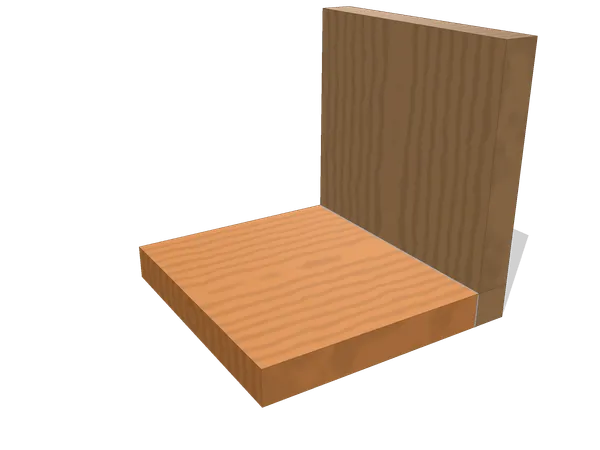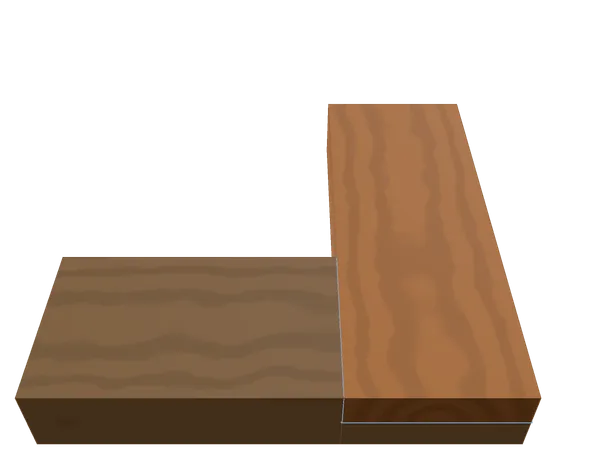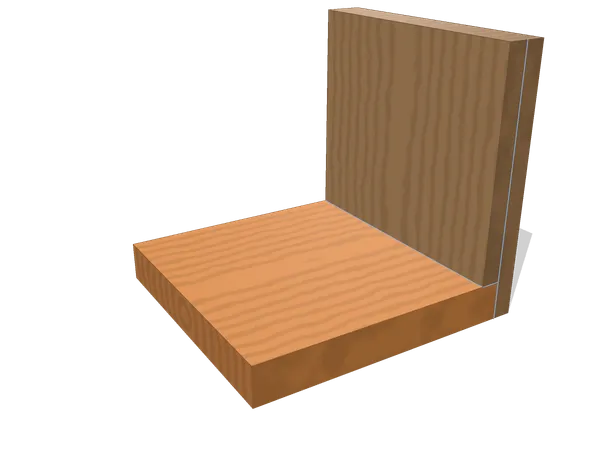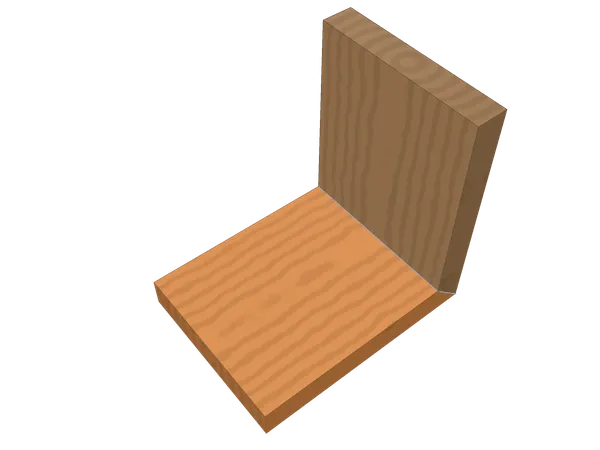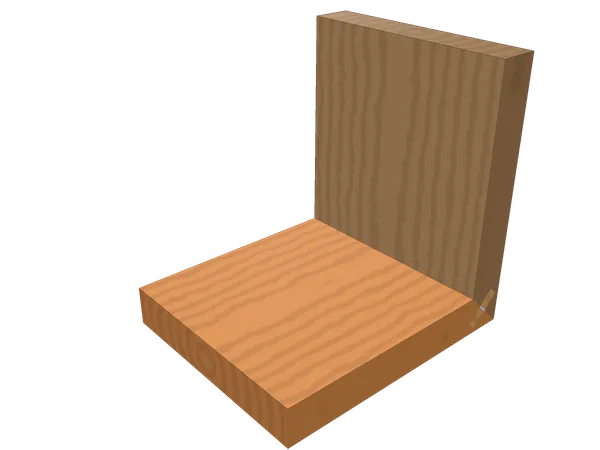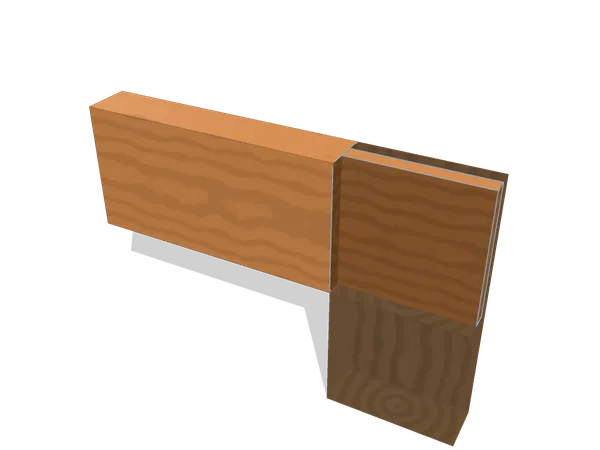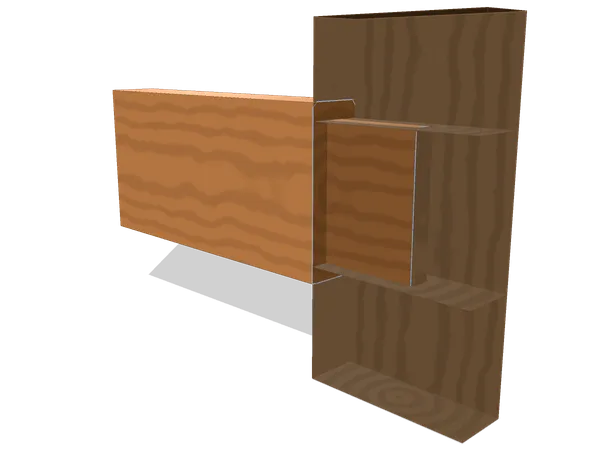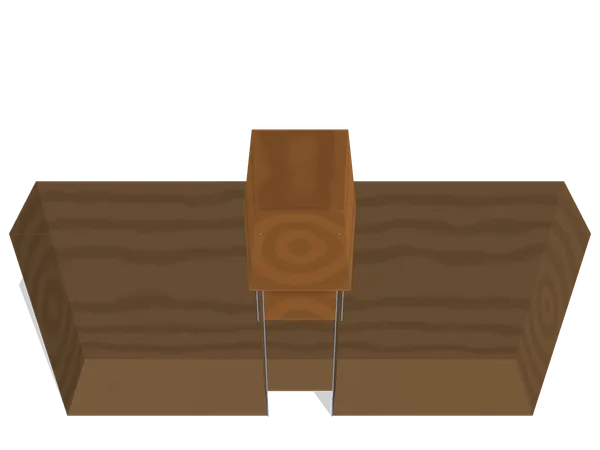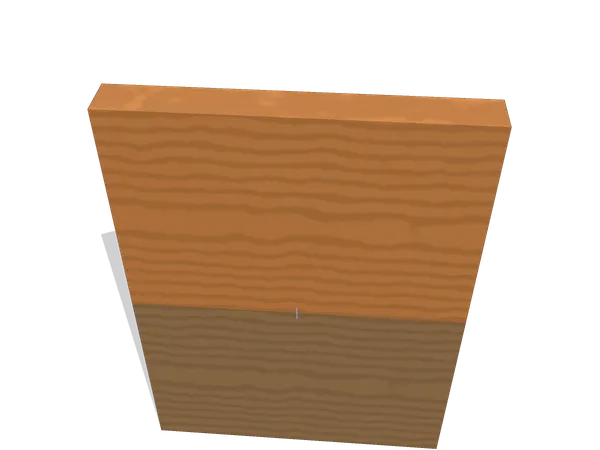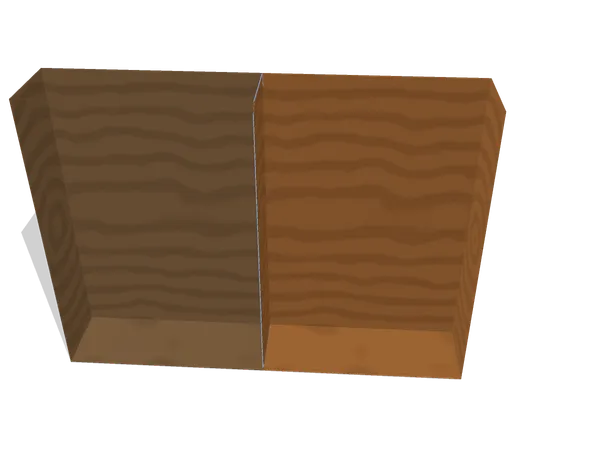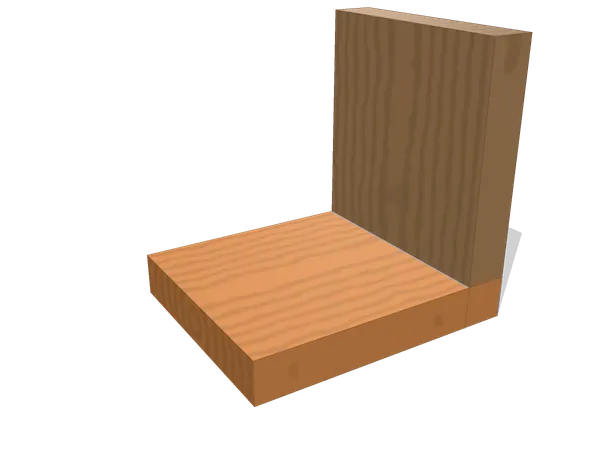
Dovetail joint
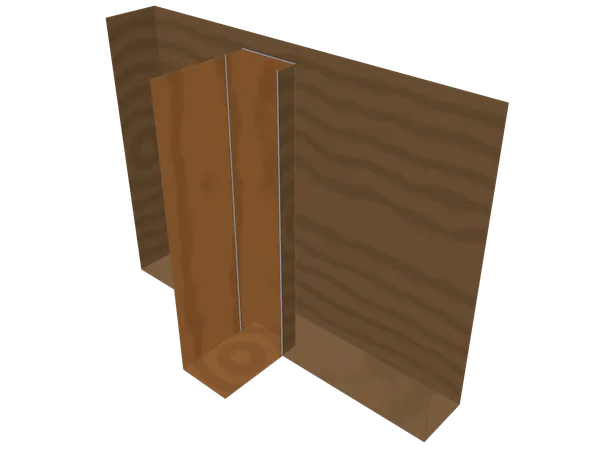
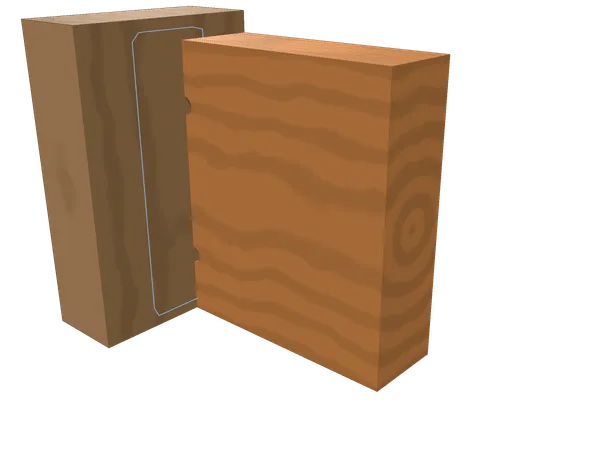
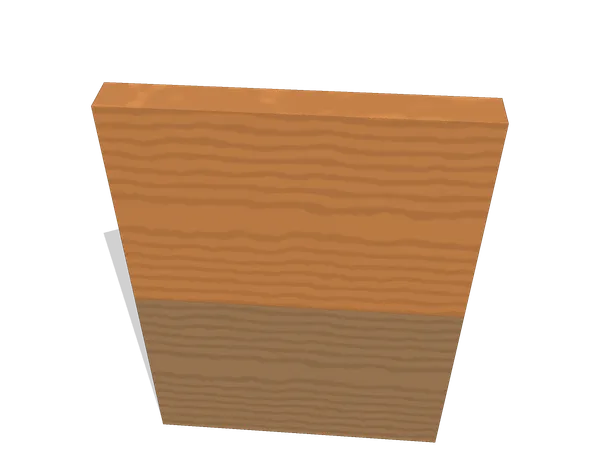
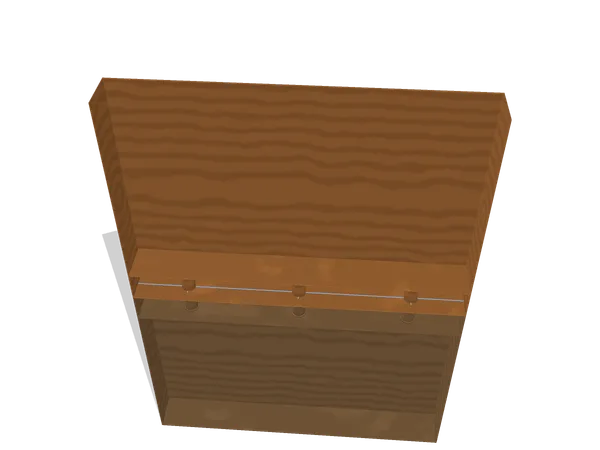
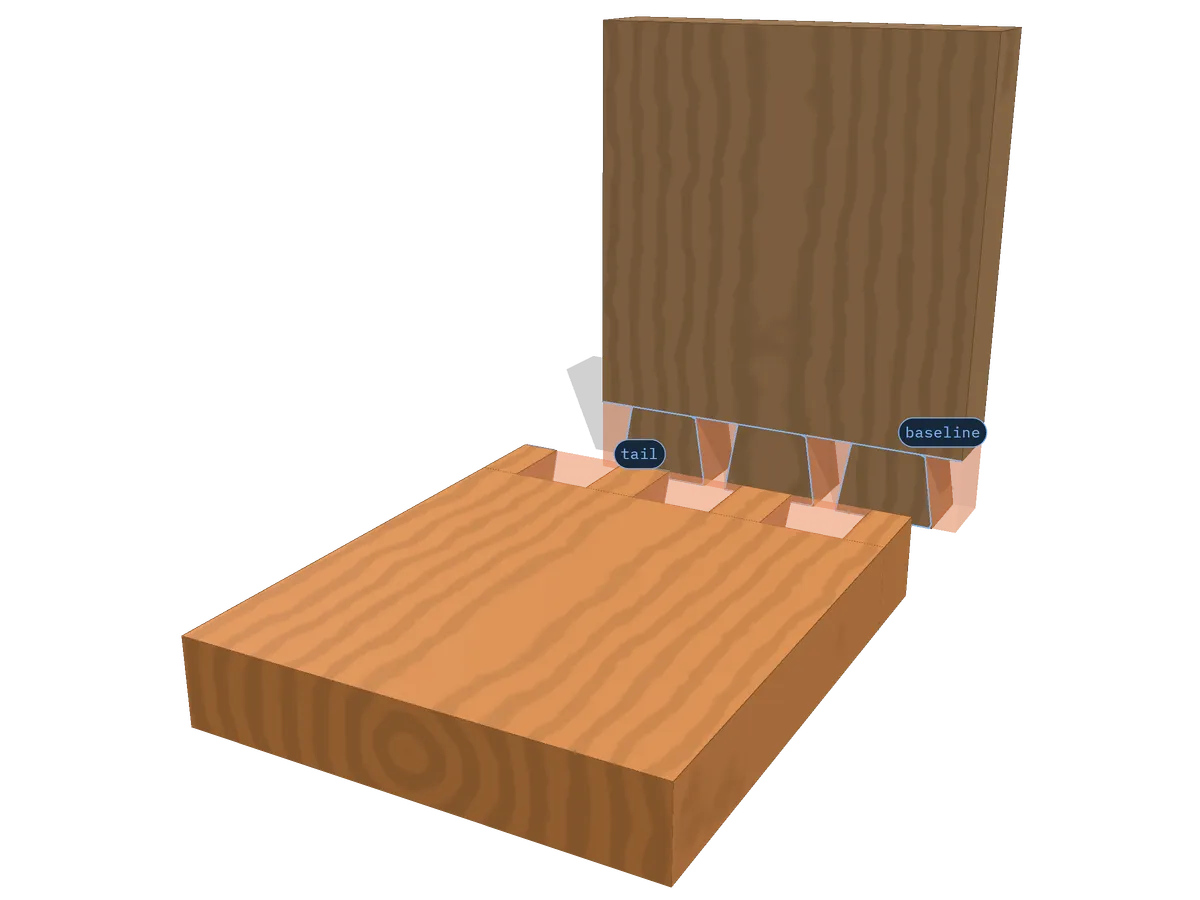
Wedge-shaped tails drop between pins so the corner locks mechanically along one axis, not by glue alone.
Scrub any joint from layout marks to a seated fit, and see exactly which material leaves the board.
The 3D viewer stopped.
Mark out (1 of 4)
Construction
Inspect
Continue
Nothing here is a video: the geometry is evaluated in your browser as you drag.
LIVE 15 · STATES 4 · EVERY CLAIM SOURCED
All fifteen joints have their own page and 3D viewer. Each page appeared only after its geometry was drawn and checked; home and the hub use the same list, so their catalogs cannot drift apart.
Live: 15
Wedge-shaped tails drop between pins so the corner locks mechanically along one axis, not by glue alone.
Square fingers alternate across the corner, every one cut to the same width.
Each piece gives up half its thickness so the two halves stack back into one thickness.
Along one edge runs a square step; the mating board sits into it and the corner registers.
Two ends cut at half the corner angle meet with no end grain showing outside.
Slotting a finished miter and setting a thin spline across the line adds long-grain gluing surface.
An open mortise takes a full-width tenon, so the joint is cut entirely from the outside.
The tenon enters a cut pocket; its shoulders land on the face and fix the angle.
Tapered tail, matching housing: a shelf goes in from one end and slides home along it.
A flat-bottomed trench across the grain houses the end of a shelf on three sides.
Screws leave a bored pocket at a shallow angle and bite into the stile through the rail end.
A tongue on one edge sits in the groove of the next, keeping boards flush as they move.
Round pins in matched bored holes register two boards and carry the glue line between them.
Compressed oval biscuits sit in crescent slots, swelling with glue to align two edges.
Two square-cut ends meet with nothing but glue or a fastener holding the line together.
Every joint page runs the same four states.
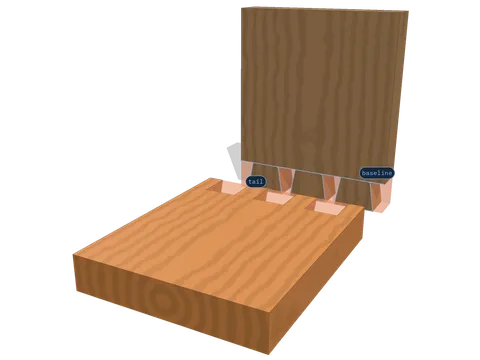
1Mark out
Layout lines are scribed from the mating piece: gauge lines along both edges, the shoulder squared across the face.
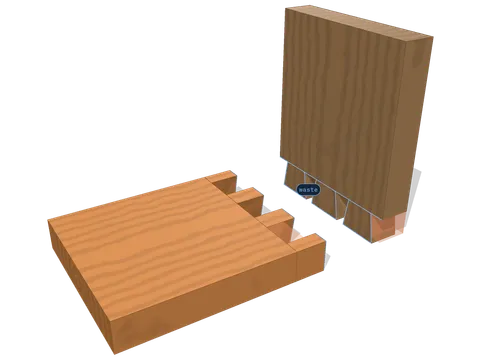
2Remove material
The waste is sawn and pared away. The viewer holds the removed volume on screen in waste orange before it goes, so you can see what leaves the board.
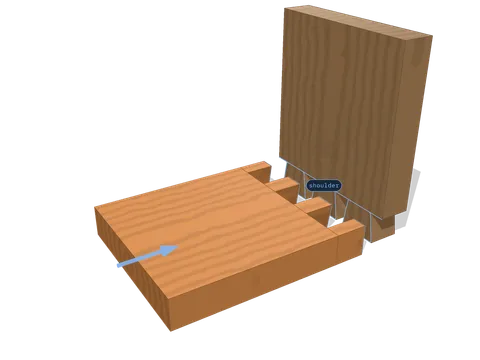
3Test fit
The moving piece travels along its insertion axis. Where the two parts want the same space, an interference box marks it.
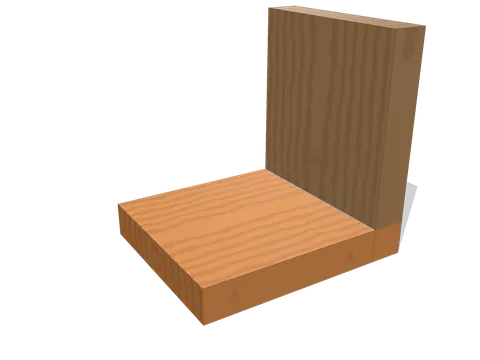
4Assemble
The joint seats. Each shoulder lands on its mating face and the assembly closes to a single finished dimension.
Fifteen joints, four construction states each, and no figure the site cannot show you the source of.